AETHER in Motion: Ninoska Vasquez and Ale Ghersi in CDAM’s sculptural language
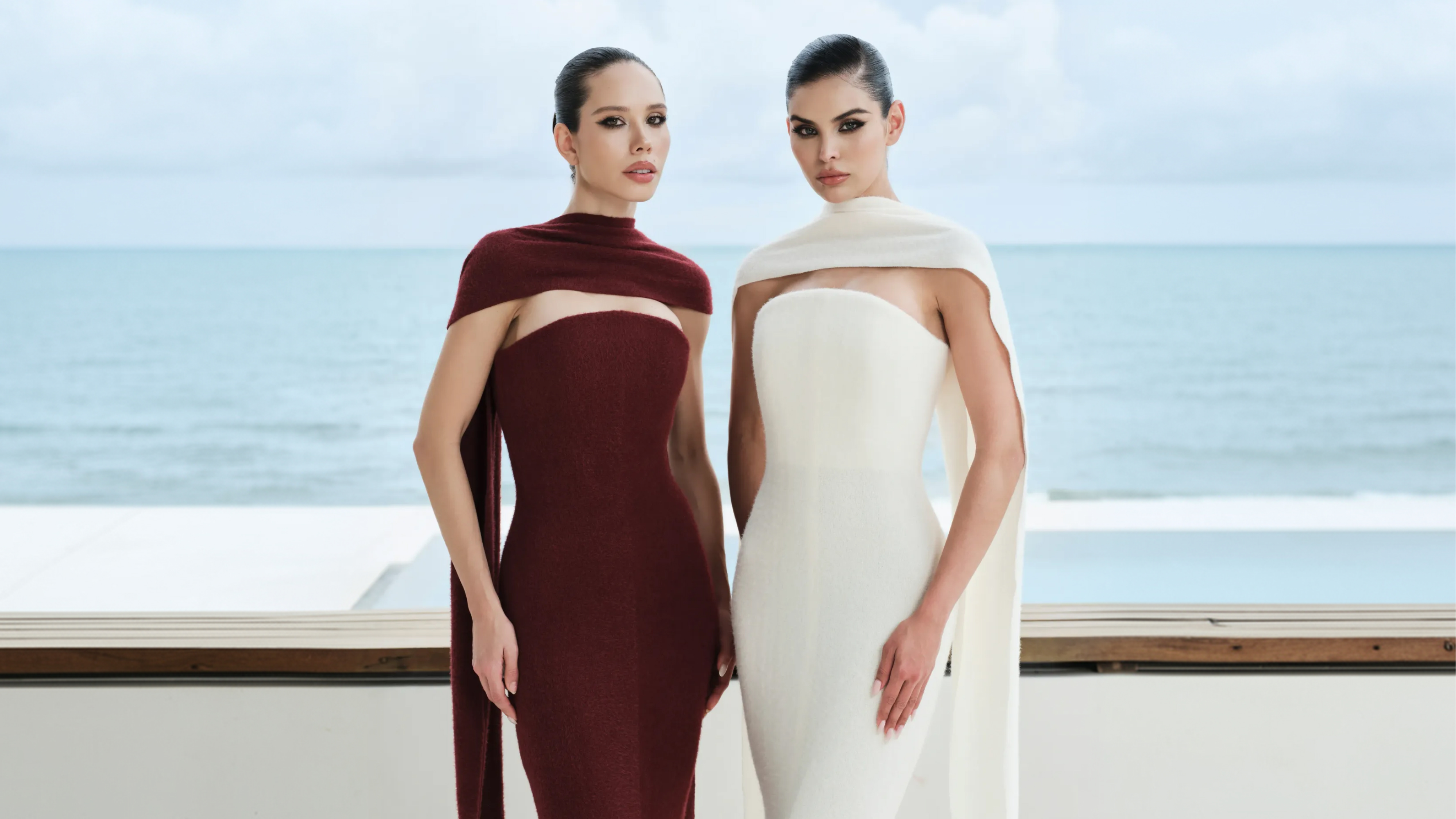
Two influential figures in international fashion, Ninoska Vasquez and Ale Ghersi bring distinct interpretations of contemporary style to the world of AETHER. With more than 1.2 million followers on Instagram, Ninoska has cultivated a presence spanning fashion, runway culture and lifestyle, alongside her work as a businesswoman. Ale Ghersi, meanwhile, is the founder of Ghersi Management and works across artist management and photography, positioning her at the intersection of fashion, image-making and the wider creative industry.
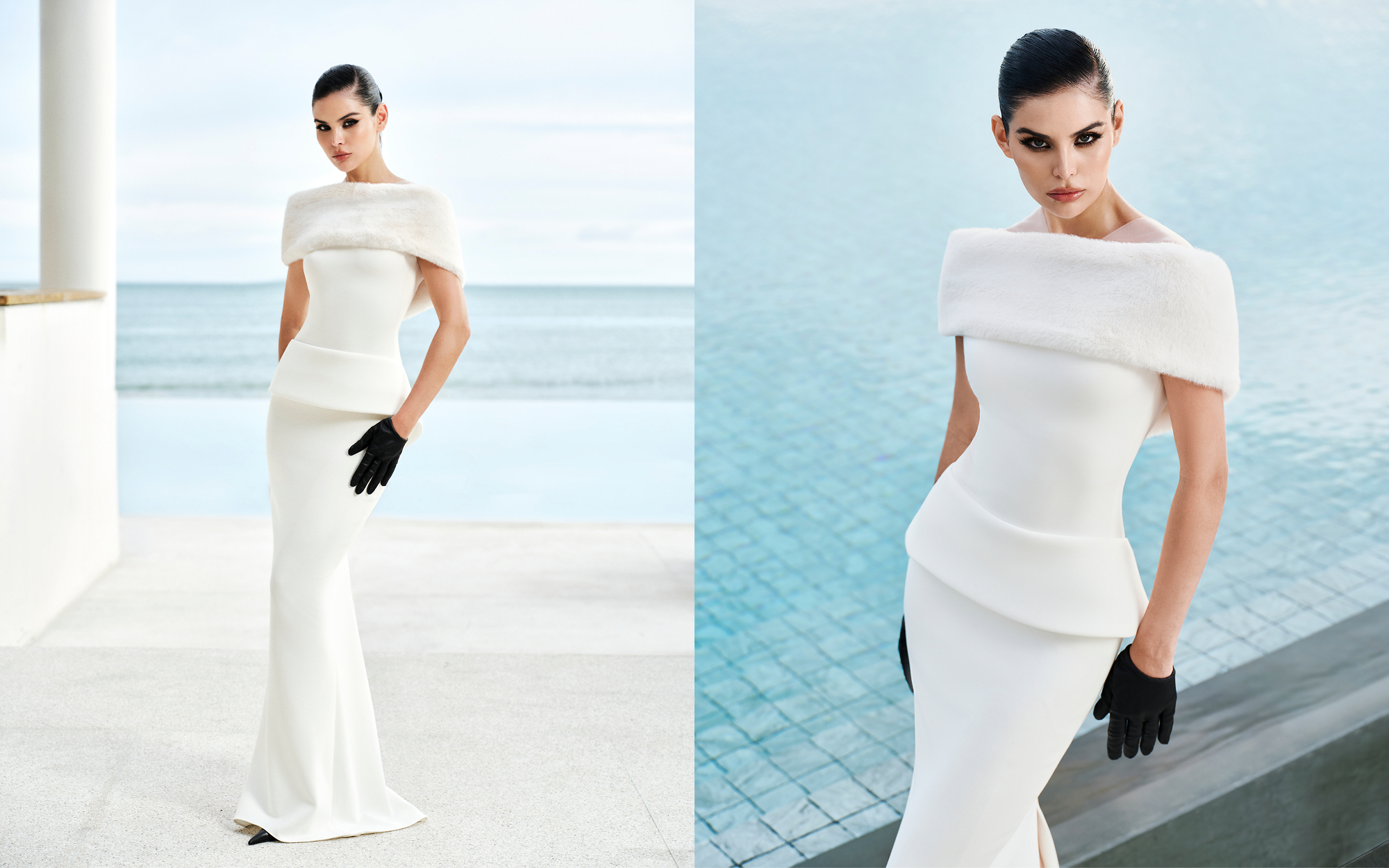
In a new editorial photographed at Azerai Ke Ga Bay, their individual perspectives meet within CDAM’s AETHER universe. Rather than simply wearing the collection, Ninoska and Ale bring something of themselves to each silhouette, opening a dialogue between body, garment and space – a creative thread that runs throughout AETHER.
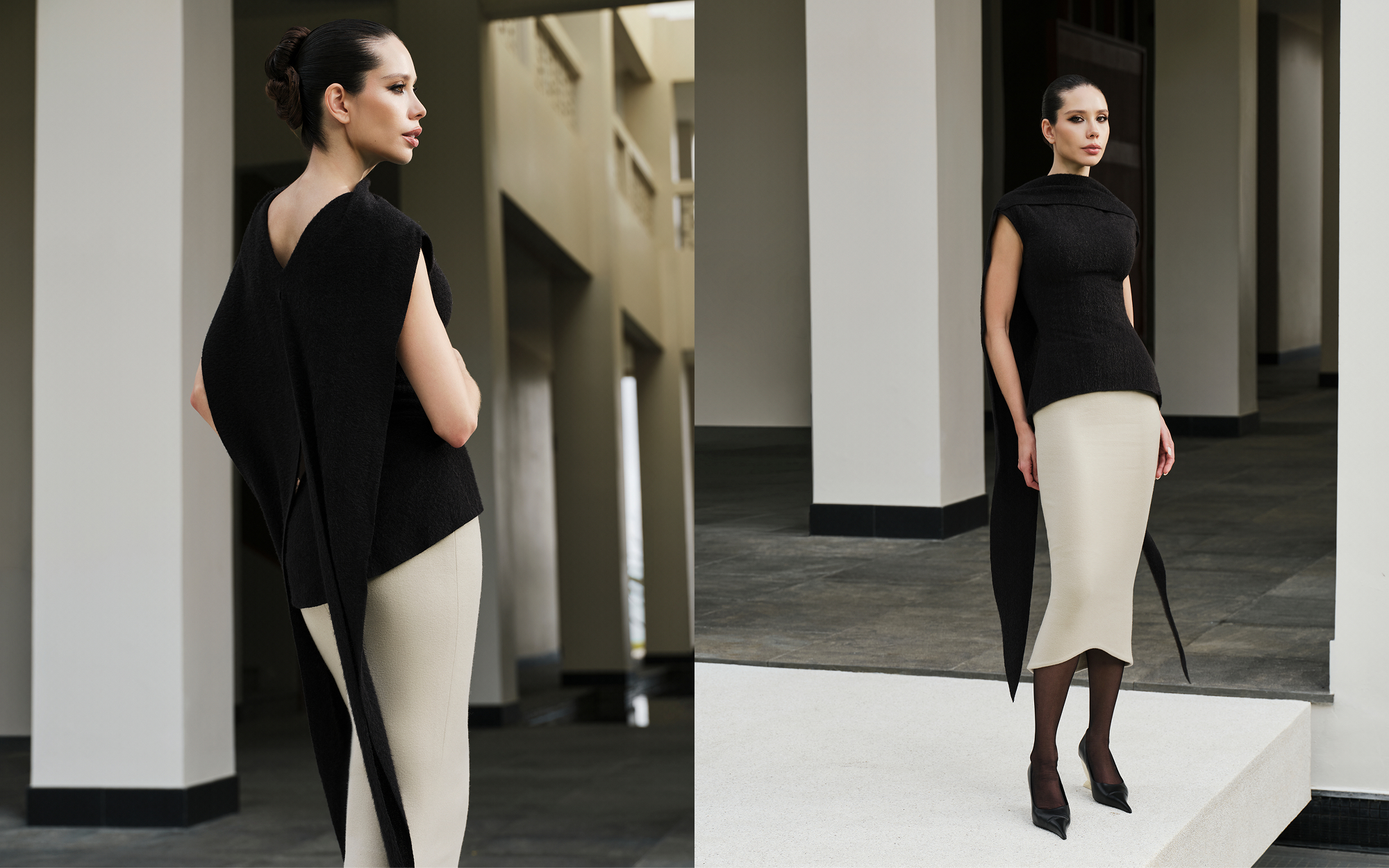
Against still water, a vast horizon and the resort’s restrained architectural lines, the clothes take on a different rhythm. Structures remain defined without becoming static; bold volumes leave room for the body to shift and respond. It is within this tension that AETHER’s idea of “living sculptures” becomes tangible.
When form moves with the body
In AETHER SS27 – CDAM’s Spring/Summer 2027 collection – fashion begins with structures that borrow from the language of sculpture, yet resist remaining still. Curves develop into cut-outs across the body, open spaces beneath hemlines and three-dimensional surfaces built into peak lapels. Draping releases structure into the natural movement of the body, while the palette travels from deep black, cloud dancer and burgundy to more expressive notes of chartreuse green and cerulean blue. Across the editorial, this language unfolds through a sequence of silhouettes, each occupying a different state.
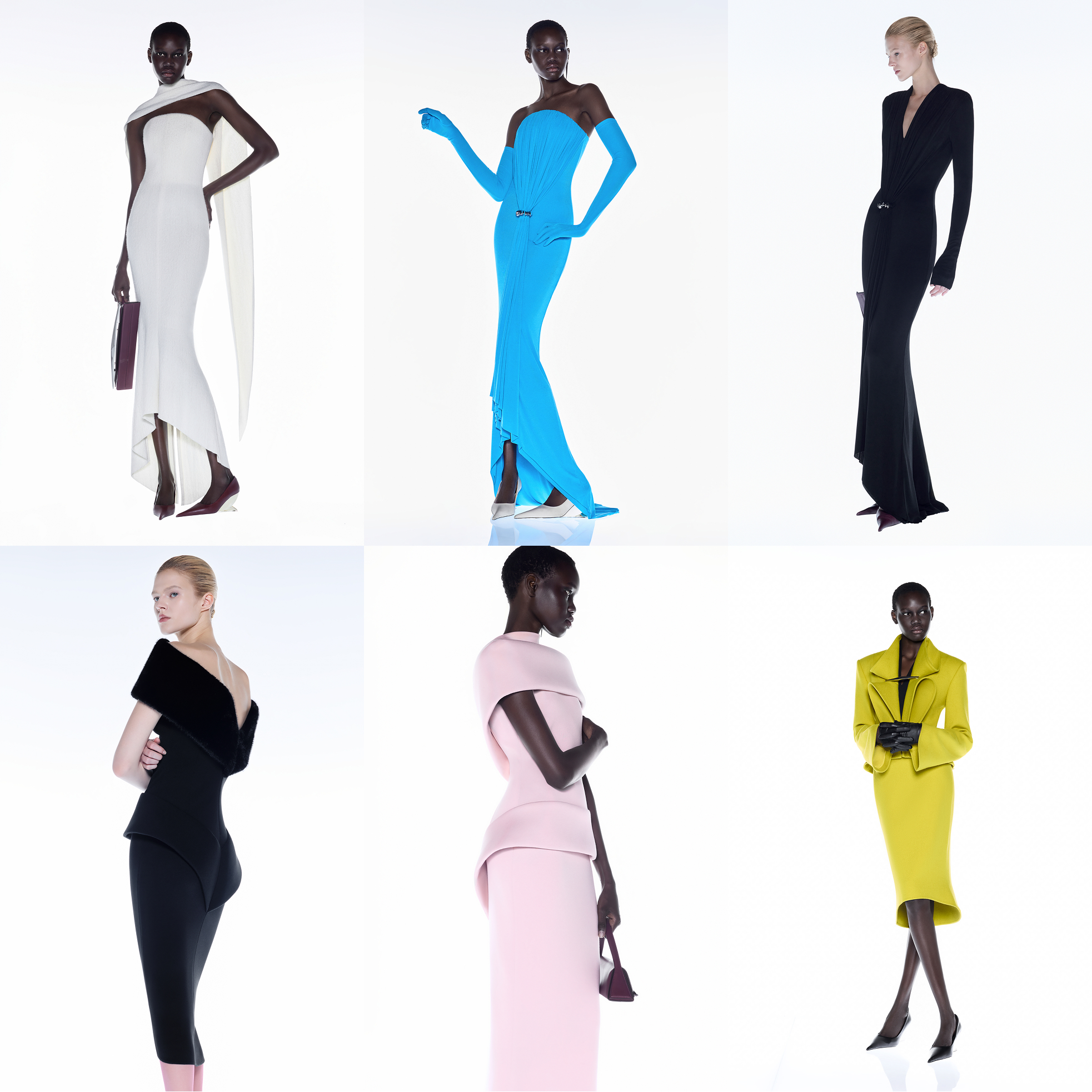
Powder-pink looks embrace the body through softly constructed layers, with extended collars opening like sculptural planes. Ivory elongates the silhouette, as fabric falling from the shoulder creates a sense of motion even in stillness. Burgundy, meanwhile, shifts between softness and precision - tracing the curves of the body in one look, then becoming more architectural in a jacket whose collar rises into structured layers.
Set against the water, the horizon and Azerai’s geometric architecture, every look develops a different relationship with its surroundings. A subtle change in posture, a turn of the body or the way fabric falls can be enough to create an entirely new form.
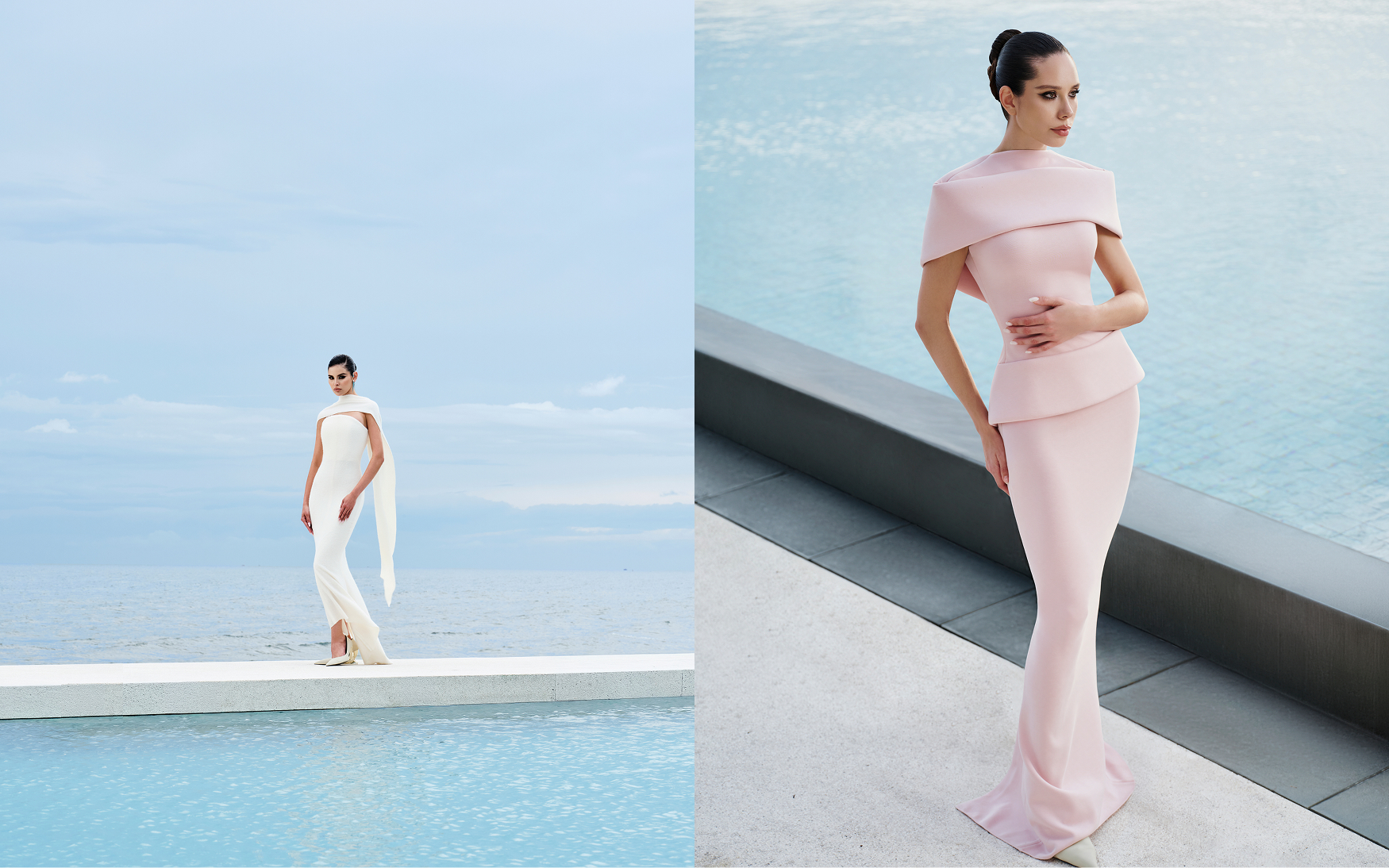
Here, the notion of AETHER’s “living sculptures” reaches its fullest expression. A garment does not exist as an isolated object; it comes into its own through the movement and presence of the person wearing it.
If sculpture is traditionally understood through mass, object and stillness, fashion exists through the body, movement and time. AETHER places these seemingly opposing languages alongside one another to reveal their points of convergence: straight lines giving way to curves, structure dissolving into movement, and a silhouette changing with every gesture.
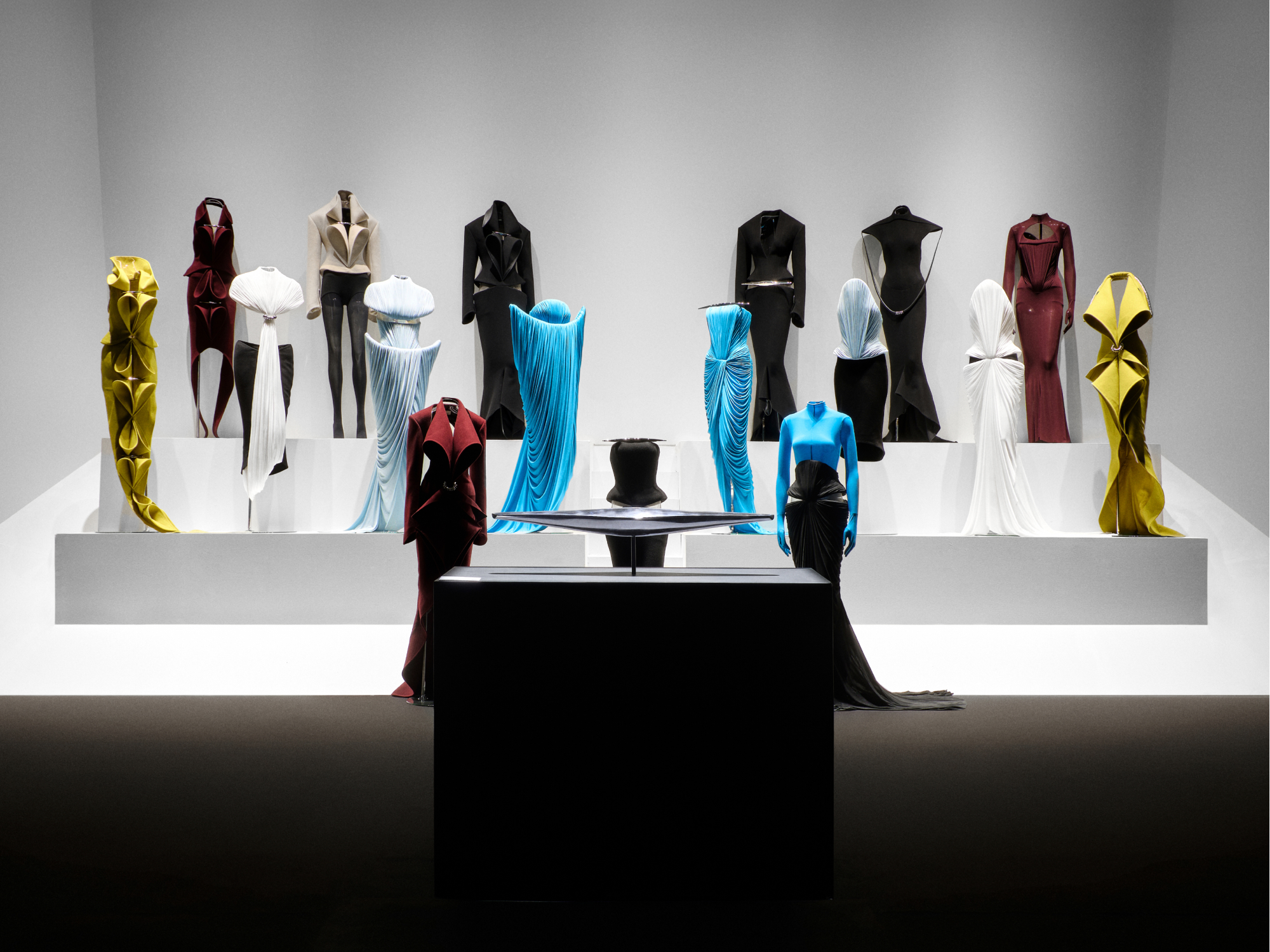
This dialogue also formed the foundation of the AETHER exhibition, a project for which Cường Đàm developed his practices in fashion and sculpture simultaneously over 18 months. Across 20 fashion works and four sculptures, the two disciplines converged around a single idea: “Open Limits”.
Two personalities, one AETHER world
Ninoska and Ale carry that idea beyond the exhibition space and back to the living body. In some images, the silhouettes retain an almost meditative stillness, their construction held in precise balance. In others, a glance, a gesture or a shift in posture gives the garment a more assertive presence, offering an entirely different reading of the same design language.
The contrast between the two women brings AETHER’s adaptability into sharper focus. The clothes retain CDAM’s distinctive identity without imposing a singular character on the wearer. Instead, each silhouette becomes an open structure - defined enough to carry its own point of view, yet fluid enough to absorb the individuality of the woman within it.
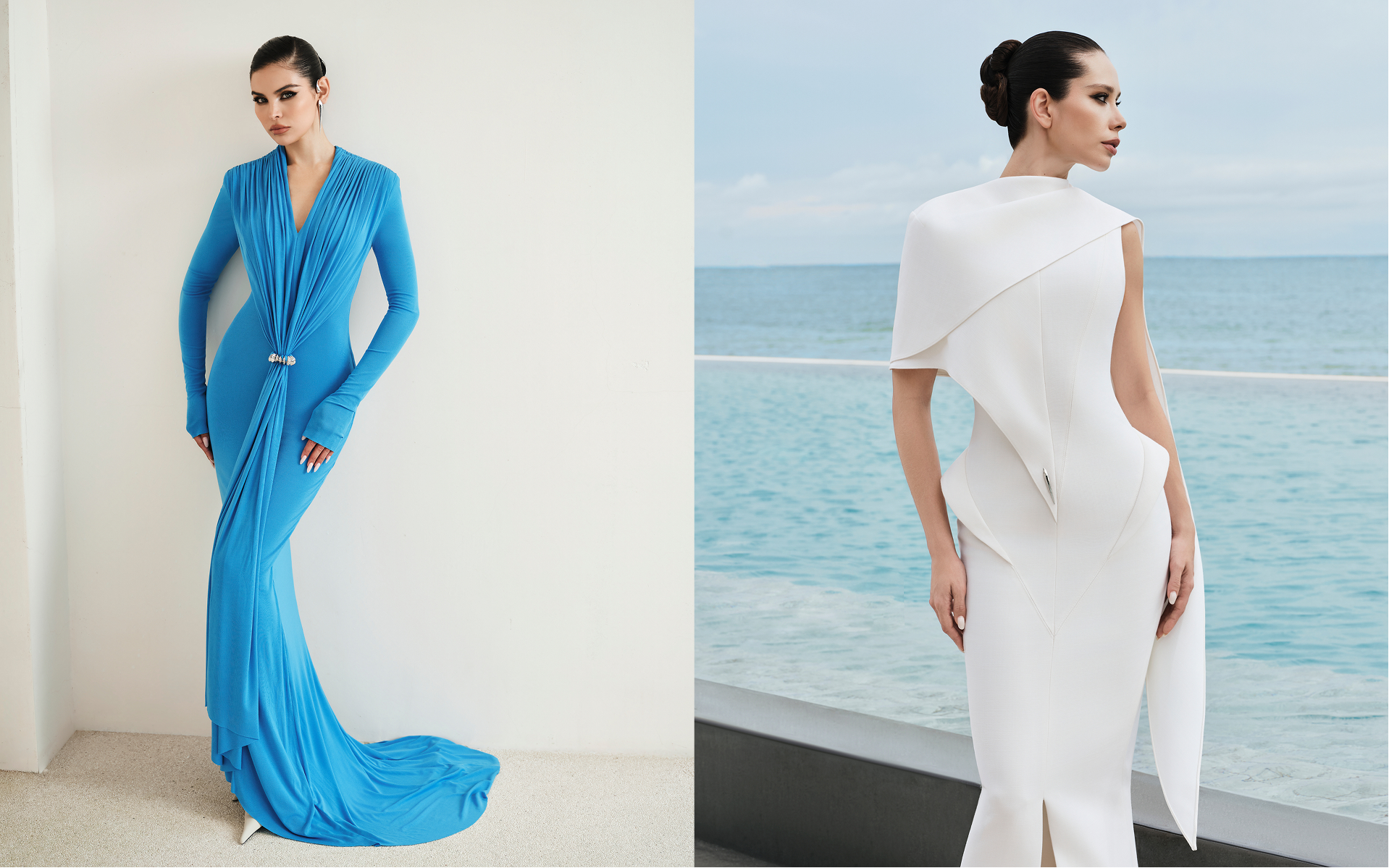
This is also at the heart of “Open Limits”. For Cường Đàm, a boundary need not represent an ending. It can become a threshold - an invitation to shift perspective and enter another space of perception.
In fashion, that idea is expressed not only through cut-outs and openings, but through the constant exchange between structure and body. A garment may appear rigorous in stillness and soften entirely in motion; a single silhouette can hold strength and fragility, precision and freedom at once.
From this tension emerges CDAM’s idea of “feminine intelligence”. Femininity is not reduced to a single state or characteristic. Instead, a woman can contain seemingly opposing qualities simultaneously – strength and softness, instinct and reason - and transform them on her own terms.
Against the stillness of Azerai Ke Ga Bay’s architecture and the continuous movement of the sea, that dialogue finds a natural setting. Ninoska Vasquez and Ale Ghersi do more than wear AETHER; their presence continues to shape the clothes, allowing each silhouette to take on its own rhythm and attitude.
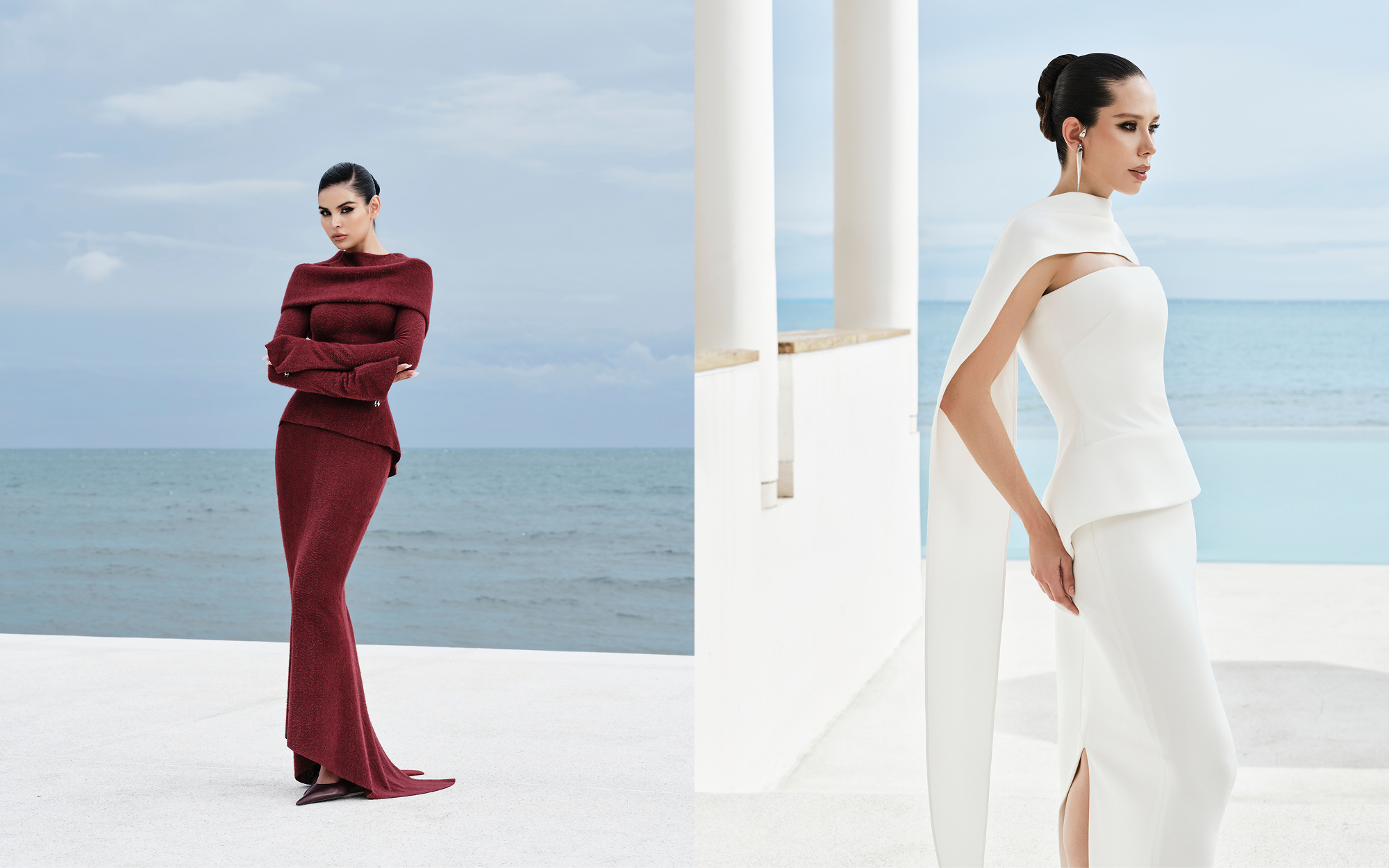
Perhaps this is ultimately what lies behind AETHER’s “living sculptures”: not forms created to remain still, but structures that become complete only when they are lived in, set in motion and shaped by the individuality of the woman within them.